Drywall Repair and Wall Textures Done Right in Chimney Rock, NC
Drywall repair and wall textures in Chimney Rock, NC restore damaged, uneven, or outdated wall surfaces so your home looks clean, fresh, and ready to paint.
What Kinds of Drywall Problems Do Homes Typically Need Repaired?
Drywall damage takes several forms, and most homes have at least some of it — the question is how much work it needs before the wall is smooth and ready for color.
Small holes from nails, screws, or doorknob impacts are the most common type of repair. These can often be filled with a lightweight patching compound, sanded smooth once dry, and blended into the surrounding wall with minimal effort. The key to an invisible repair is feathering the compound edges out far enough that the patch does not show as a bump under paint.
Larger holes from plumbing or electrical work, or areas where drywall has been removed and replaced, require more involved repairs. A backer board or patch panel is secured behind the opening, then new drywall material or mesh tape and compound build the surface back up. Several coats of compound, each sanded between applications, create a smooth result that matches the surrounding wall.
Cracks are another common issue, particularly where walls meet ceilings or at corners. Hairline cracks are often cosmetic and can be filled and painted over. Recurring or wider cracks may indicate minor settling and benefit from mesh tape reinforcement before the compound is applied, which helps prevent the crack from returning.
Can You Match an Existing Wall Texture After a Repair?
Yes — matching an existing texture is very achievable with the right tools and techniques, and it makes repaired areas blend seamlessly into the surrounding wall.
Orange peel texture, named for its bumpy resemblance to citrus skin, is one of the most common textures found in residential homes. It is applied with a spray hopper or a roller technique and can be adjusted for coarser or finer results depending on what the existing wall shows. Getting the right density and drying time before painting is what makes the match convincing.
Skip trowel and knockdown textures involve applying compound with a trowel, then flattening or knocking down the peaks to create an irregular, layered look. These textures are more hand-applied and require a practiced eye to replicate the original pattern well. The goal is never a perfect mathematical match — natural variation is part of the texture — but the overall density and depth should feel consistent across the wall.
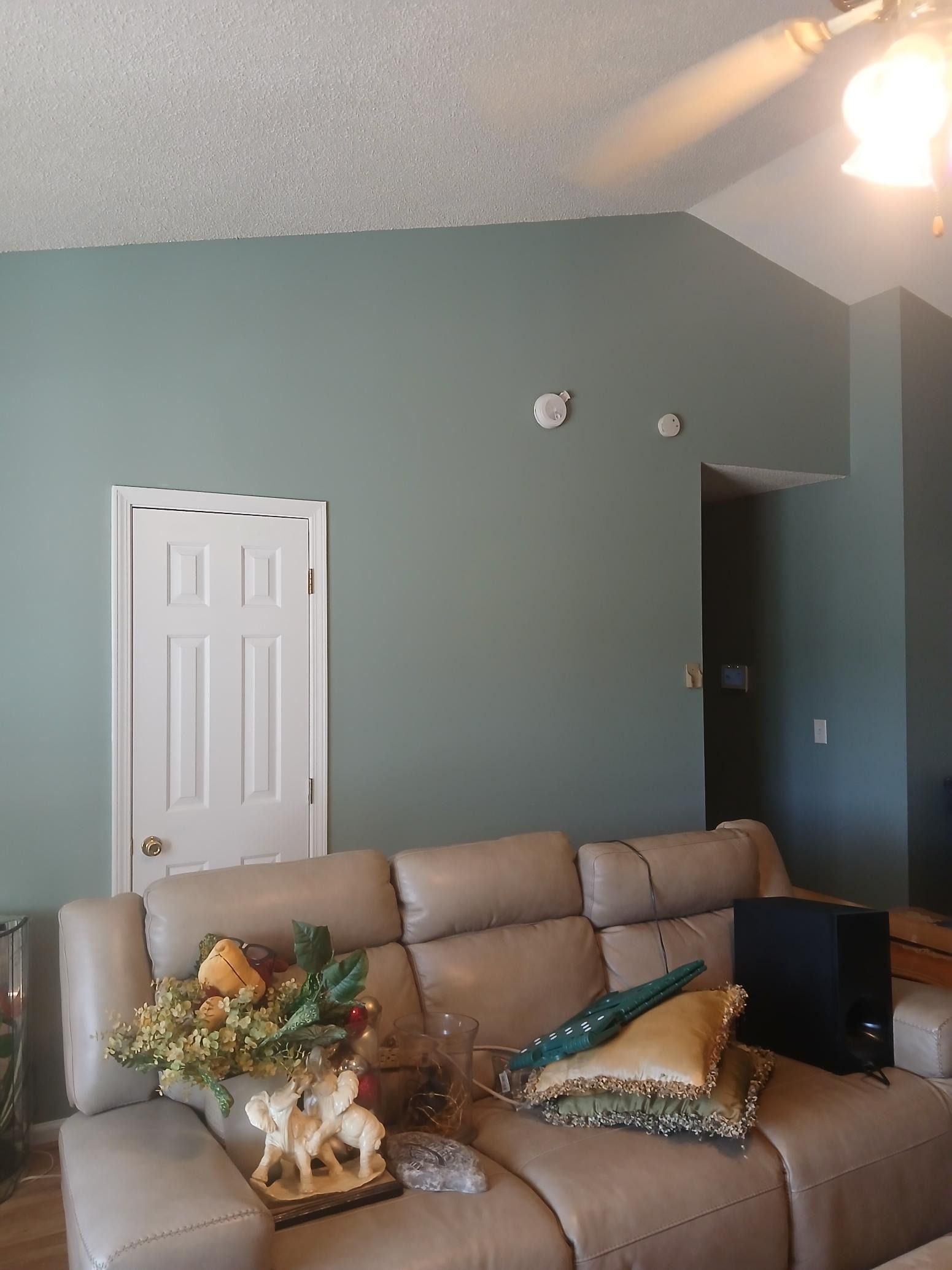
You can see examples of the drywall and surface work available on drywall and texture projects to get a sense of what different finished results look like.
Smooth walls require the most preparation of all — every imperfection shows under paint when there is no texture to hide it. Skim coating — a thin layer of compound spread across the entire surface — is the technique used to achieve a truly flat, clean wall ready for a smooth paint finish.
When Is It Time to Replace Drywall Instead of Repair It?
Most drywall damage is repairable, but there are situations where the more practical solution is to replace the affected section rather than patch it.
Water damage is the main reason drywall gets replaced rather than repaired. When drywall gets saturated and stays wet, it loses its structural integrity and can develop mold. Soft, discolored, or crumbling drywall that shows signs of water exposure needs to come out entirely. The source of the moisture should also be resolved before new material goes in, or the problem will return.
Very large damaged areas where the surrounding material is also compromised may be better served by cutting out the damaged section and installing a new panel. This approach gives a cleaner and more predictable surface than trying to build up thick layers of compound over a large area. It also takes less time in some cases than multiple rounds of patching and sanding.
Drywall that is severely deteriorated from age, has significant pest damage, or has absorbed years of moisture is typically better replaced than repaired. A professional can assess the condition quickly and recommend the most practical path forward.
How Chimney Rock's Mountain Terrain Affects Drywall Work in Nearby Homes
Homes in and around Chimney Rock sit in a narrow gorge carved by the Rocky Broad River, and the terrain there creates specific conditions that affect how homes perform over time — including their interior wall surfaces.
The gorge setting means homes near Chimney Rock are exposed to high humidity and temperature variations year-round. Moisture from the river corridor and frequent rain work their way into older structures more readily than in drier or more open locations. This moisture movement causes wood framing to expand and contract, which in turn stresses the drywall attached to it. Hairline cracks at seams and corners are common and tend to recur if not properly reinforced.
Homes built on or near rocky slopes may also experience minor settling from the terrain, which shows up as cracking or separation at wall-to-ceiling joints. Addressing these cracks with proper tape and compound reinforcement — rather than just filling and painting over them — produces repairs that hold up through future seasonal movement.
A painter with experience in mountain-area properties understands the relationship between local climate, building movement, and drywall performance, and brings that knowledge to every repair decision.
Combining Drywall Repair With a Fresh Paint Job
Drywall repair and painting go hand in hand — fixing the walls first creates the clean surface that makes a fresh paint job look its best.
Scheduling repairs and painting together is the most efficient approach for any room. The repair process involves dust from sanding, which settles on surfaces and needs to be cleaned before painting begins. When both services are handled together, the prep, repair, cleanup, and painting flow in the right order without extra scheduling or waiting between phases.
Repaired areas also need to be primed before painting, especially where bare compound is exposed. Compound is more porous than painted drywall and absorbs paint unevenly if not sealed first. A good primer coat over the repaired spots prevents the sheen differences — often called flashing — that can show up in certain lighting conditions even after the topcoat is applied.
When the repair and paint work are finished, the room looks complete rather than patched. That seamless result is the difference between a repair that just fills the hole and one that actually restores the wall. Interior painting services can be combined with your drywall work for a complete wall restoration in one visit.
Connect with The Handy Painter to discuss what your Chimney Rock area home needs for smooth, paint-ready walls and a finish that holds up long-term.